When the North Atlantic Treaty was signed, nuclear deterrence was already being discussed among the countries involved. The Cold War context of 1949 made collective defence (including nuclear defence) particularly central, placing the nuclear tool at the heart of the Alliance’s formation.
Views on deterrence nevertheless differed from the very outset. As a recent example, Finland, which joined NATO in April 2023, had previously adopted a law banning nuclear weapons from its territory. That law was lifted last June in view of the international context. Even so, the first three years Finland spent in the Alliance with this law in place show the ambivalence that exists in relation to nuclear deterrence. Member states do not necessarily share the same attitudes towards it. Deterrence nevertheless remains a founding condition of the Alliance. It therefore seems natural to question the fragility of the links between members in light of these differences – all the more so given recent developments in transatlantic relations. Nuclear deterrence could thus appear both as a foundation of and a source of weakness for the Alliance’s balance.
A historically ambivalent tool
The ambivalence of nuclear deterrence today raises questions about its durability and stability.
During the Cold War, which corresponds to the first nuclear age, the imminent threat of proliferation swept away any doubts about the need for extended American deterrence. The two uses of the atomic bomb by the United States had brought about profound changes in international relations – changes that ultimately led to the creation of NATO and its nuclear counterpart. Nuclear weapons within NATO embodied a guarantee for the Alliance in the face of the power of the other bloc.
At the end of that period, the absence of a direct nuclear threat in the world undermined the primary purpose of extended deterrence. Under the effect of the second nuclear age and the collapse of the Eastern bloc, the essential nature of this deterrence came to be questioned within the Alliance itself. These challenges, more than mere disagreements, may have damaged the political credibility on which deterrence entirely depends. In 1998, German left-wing parties proposed a No First Use Policy which, as its name suggests, would have reduced the occasions for using nuclear deterrence. Even without looking at the substance of these criticisms, the mere fact that they were present in various think tanks shows a weakening of the system. Nuclear deterrence rests entirely on the credibility other states give to the real possibility of its use. Internal reconsiderations can thus be seen to call into question the stability of NATO’s deterrence.
However, the events following Russia’s annexation of Crimea in 2014 partly silenced these questions. This could be seen as a third nuclear age, extending to the present day, which remains to be defined.
Yet this third age also brings its own difficulties, notably linked to the current political context in the United States. The gaps between the US administration and the other countries of the Alliance once again raise questions of credibility in today’s context.
The model under strain today
In European public opinion, doubts about the reliability of the United States to act for Europe in a major crisis are now present. This is all the more significant given that the US administration is one of the main sources of doubt about the stability of the deterrence model, both nuclear and conventional. It is hard to miss its calls for other countries to contribute more to their own defence. Yet the conflict in the Middle East, in which the United States is involved, partly answers this question. Being geographically far from the theatre of operations, the access the United States enjoys to its European Allies’ bases and airspace is an advantage that puts the Alliance’s weaknesses on this issue into perspective. Despite the damage to the credibility of deterrence and internal differences, the need for this tool in Europe – given Russian threats and US military requirements – gives the model a degree of stability.
So, although ambivalent, NATO’s nuclear deterrence would, in the view of some, simply require adjustments to the third nuclear age, without signalling the end of the model’s reliability.
A complex adjustment
Such an adjustment could come about through a redistribution of nuclear responsibilities in Europe. It would, however, risk causing a loss of solidarity within the Alliance, which would further weaken the nuclear tool. The recently proposed French “forward” nuclear deterrence, for example, has drawn a range of reactions reflecting divisions that could result from a profound change.
In Germany, Boris Pistorius, Federal Minister of Defence since 2023, sees the deterrence proposed by the French President as a potential sign of distrust towards the United States. This could once again lead to a weakening in which members risk drifting apart through their differing opinions.
This loss of solidarity also occurs within governments themselves. In Poland, Prime Minister Donald Tusk sent favourable signals towards the French initiative, while Marcin Przydacz, a member of parliament and former government member, supported maintaining the current arrangement based on American nuclear weapons.
Finally, for others, the question is different, based more on the credibility of this initiative than on its consequences for stability. Just as doubts hang over how the United States would respond if needed, doubts about nuclear France’s action in the event of a violation of other Allies’ vital interests are raised repeatedly. Thus, even the solution envisaged for the weakening of NATO’s nuclear tool seems to have weaknesses of its own.
Conclusion
In short, the nuclear question is, and has always been, a divisive issue within NATO. Although this deterrence is necessary and lies at the origin of the Alliance, its obsolescence in the event of a loss of solidarity remains a possibility. Differences between members make it an ambivalent tool, both weakening and strengthening the Alliance’s positions. Overall, NATO’s nuclear posture remains effective, and past changes in deterrence in international relations have shown the model’s capacity to adapt, which leaves ample room for optimism about future adjustments.
Lessa Laloux
Lessa Laloux is a student at Sciences Po Saint-Germain with a passion for international relations. Through her language skills (English/Spanish) and experiences such as writing this article, she hopes to build a career in this field.
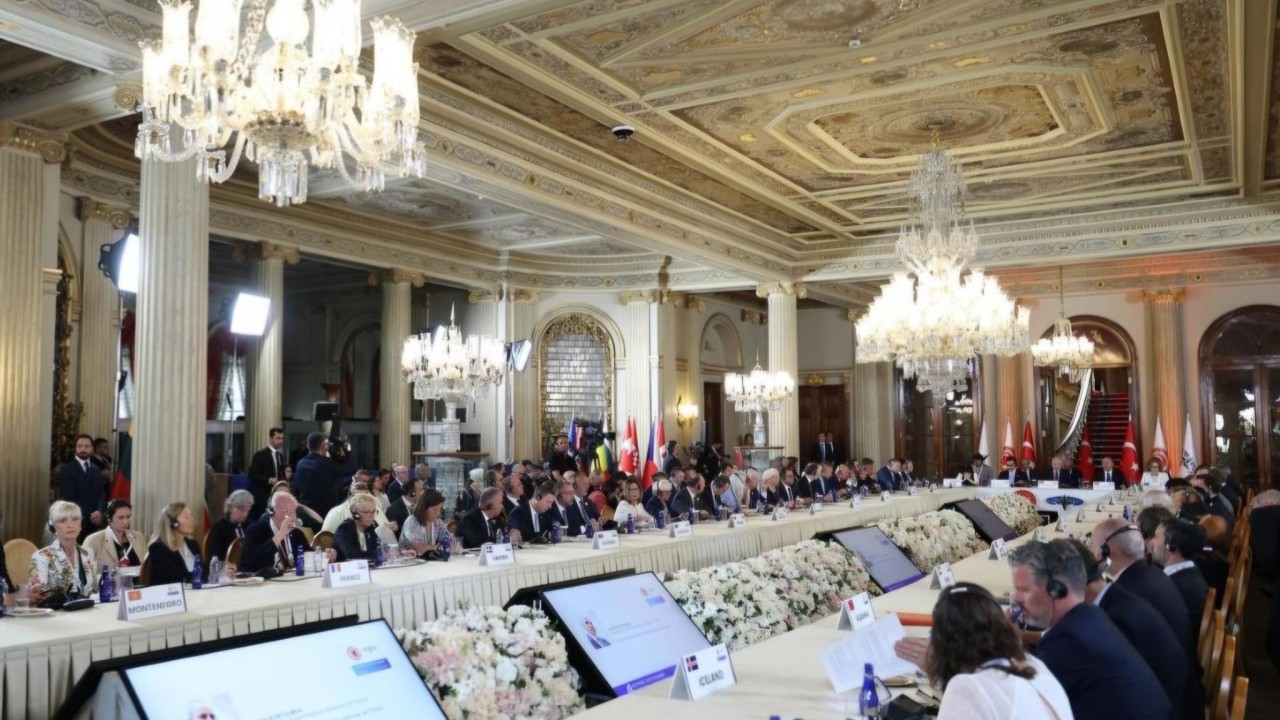
Articles published in the AFCEA Journal reflect only the views of their authors. Article originally published in French on LinkedIn on 8 September 2026. Illustration: 2026 Istanbul NATO Parliamentary Summit (kureansiklopedi.com).
This article was translated from French by Claude (AI). In case of any discrepancy, the French version prevails.
Leave a Reply