Article rédigé en anglais dans le cadre de la Summer School « War & Diplomacy » (juillet 2026).
Much of the literature on the structure of world order treats security as something states possess or lack, measured by territorial control, diplomatic recognition and deterrent capacity. It argues that major conflicts recur in the modern era not despite the structure of world order but because of it: that structure secures states and the great powers that arbitrate between them, while treating the security of individuals living inside conflict zones as a secondary, negotiable variable — a post-Westphalian predicament that traditional interstate diplomacy is poorly equipped to resolve. The concept at the centre of this argument is human security, defined as security organised around the individual and community rather than the state (Kaldor, 2007, Human Security: Reflections on Globalization and Intervention, Polity Press). This essay applies that concept to two structurally comparable cases, Afghanistan (2001–2021) and Syria (2011–2019), through their contrasting forms of external intervention and collapse, before closing with the 2026 Iran conflict as an indication that this pattern remains visible in contemporary international politics.
What is human security?
On a rudimentary level, security has traditionally meant protection of the state from external military threat. Yet this state-centric conception has yielded debate about what security is for. Barry Buzan, Ole Wæver and Jaap de Wilde widened the agenda by showing that security is not only a material condition but also a political practice shaped by the process of securitisation, operating across military, political, economic, societal and environmental sectors — dimensions visible in how 9/11 and subsequent conflicts in Afghanistan and Syria have been securitised (Buzan, Wæver and de Wilde, 1998, Security: A New Framework for Analysis, Lynne Rienner Publishers). Human security theory pushes this further still. Shahrbanou Tadjbakhsh and Anuradha Chenoy — Tadjbakhsh directs the Centre for Peace and Human Security at Sciences Po Paris and has also taught human security as an adjunct professor at Columbia University — define human security as combining both “freedom from fear” and “freedom from want”, arguing that once threats become transnational, measuring security by the survival of the state produces a systematically misleading picture: a state can remain formally intact — recognised, aid-receiving, diplomatically present — while the individuals inside it experience near-total insecurity (Tadjbakhsh and Chenoy, 2007, Human Security: Concepts and Implications, Routledge, with Afghanistan as one of their central case studies).
This produces two competing views of what world order is for. The state-centric view holds that order is achieved once states are stable and great powers avoid war; a civil war contained within one state’s borders, however catastrophic, is not a structural failure of world order. The human-security view holds that order which stabilises states while leaving populations exposed to violence and repression has not solved the problem it claims to. This distinction determines what counts as evidence that world order “explains” recurrence, and it is the distinction this essay uses throughout — though, as the conclusion later argues, that choice is itself far from a neutral or universally accepted one.
World order as a structural producer of human insecurity
The most direct explanation for why conflicts recur is that the post-9/11 order was not built around human security as its organising objective. G. John Ikenberry’s account of the American-led liberal order shows that the war on terror, the invasion of Iraq and a more unilateral posture strained the rules-based system Washington had built after 1945, replacing patient institution-building with short-term, security-first interventions whose local human consequences were rarely weighed against strategic objectives (Ikenberry, 2011, Liberal Leviathan: The Origins, Crisis, and Transformation of the American World Order, Princeton University Press). Bertrand Badie, of Sciences Po Paris and the Centre de recherches internationales (CERI), goes further, arguing that the contemporary international order is increasingly “trapped” by globalization: as hierarchical great-power control erodes, weakness and disorder become structurally central to world politics rather than a by-product of it (Badie, 2016, Nous ne sommes plus seuls au monde: un autre regard sur l’ordre international, La Découverte). Buzan and Wæver’s regional security complex theory explains why this weakness clusters geographically: patterns of amity and enmity cluster within regions and are then penetrated by external powers pursuing their own state-security objectives, meaning a region’s conflicts cannot be resolved purely at the interstate level (Buzan and Wæver, 2003, Regions and Powers: The Structure of International Security, Cambridge University Press). Such regionalised conflict is structurally less responsive to traditional forms of resolution than an interstate dispute, particularly where the decline of unifying political projects has left post-colonial MENA states vulnerable to fragmentation.
This great-power backdrop has itself shifted since 2001. Gilbert Achcar, Professor of Development Studies and International Relations at SOAS, University of London, argues that a “new Cold War” has been building since the late 1990s, replacing the bipolar US–USSR contest with a US–China axis, Russia its junior partner (Achcar, 2023, The New Cold War: The United States, Russia and China, from Kosovo to Ukraine, Haymarket Books). For MENA and Mediterranean states, politically unstable states become fields where external powers compete for economic and ideological influence rather than protecting the population caught in between. Whether the competing power is Washington, Beijing or Moscow, human security is subordinated to state-level influence.
An objection follows: does this not simply blame every local atrocity on distant powers, ignoring the agency of domestic regimes and non-state actors themselves? The structural argument does not require external powers to pull every string. It only requires that the incentive structure they create — rewarding regime survival over the protection of citizens — makes catastrophic local choices more likely to succeed. The variance is real: Tunisia’s military, unlike Syria’s loyalist security apparatus, refused to fire on protesters in 2011, forcing Ben Ali’s exit rather than a crackdown — showing structure sets probabilities, not certainties. Yet it was because Assad’s crackdown was rewarded rather than punished by his external patrons that repression, not restraint, became the region’s dominant response. Andreas Krieg and Jean-Marc Rickli of King’s College London’s School of Security Studies make a parallel point: great and regional powers externalise the burden of warfare onto local militias and proxies, lowering the political cost of intervention while raising the human cost for the population they govern (Krieg and Rickli, 2019, Surrogate Warfare: The Transformation of War in the Twenty-First Century, Georgetown University Press). Structure and domestic agency are therefore not competing explanations; the structure rewards certain domestic choices over others.
Outcomes: Afghanistan and Syria
If this structural claim is correct, it should be visible in specific conflicts, tested against consistent parameters: the nature of the external power’s engagement, the resulting capture of local governance, and the human security outcome for the population. Lawrence Freedman, of the Department of War Studies at King’s College London, situates the 2001 invasion of Afghanistan within a broader pattern of American strategic responses to crises in the Middle East and South Asia — interventions often driven by immediate security imperatives rather than a coherent long-term political settlement — while Theo Farrell, former Head of War Studies at King’s College London, shows that Western forces increasingly relied on local powerbrokers, militias and a fragile, aid-dependent Afghan state to hold territory, producing governance that was militarily convenient but structurally incapable of delivering security, justice or services to ordinary Afghans (Freedman, 2008, A Choice of Enemies: America Confronts the Middle East, PublicAffairs; Farrell, 2018, Unwinnable: Britain’s War in Afghanistan, 2001–2014, Vintage).
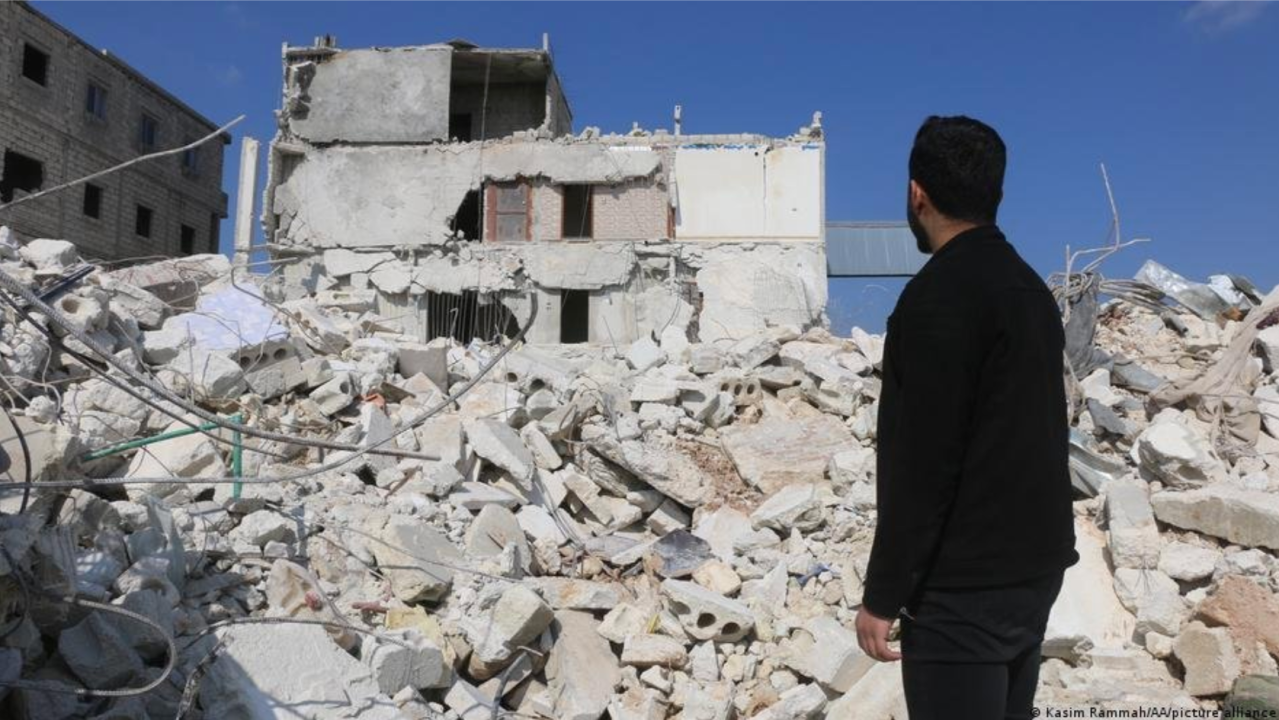
This exposed tension between short-term counterterrorism and long-term state-building objectives, locking it into dependency on foreign actors and local militias. When the United States withdrew in August 2021, this structural weakness was exposed instantly: the aid-dependent Afghan state collapsed within days, and the Taliban’s return reversed two decades of gains in women’s rights, press freedom and minority protection. The human cost of this collapse is stark: in a single recent year, terrorism killed nearly 19,000 people worldwide, with Afghanistan accounting for more of these deaths than any other country.
Syria displays the same three parameters, inverted. Where Afghanistan saw intervention followed by withdrawal, Syria saw a domestic regime’s survival strategy combined with sustained Western reluctance to intervene, alongside heavy Russian, Iranian and Gulf involvement through proxies. Jean-Pierre Filiu, Professor of Middle East Studies at Sciences Po and a researcher at CERI, shows that the Syrian, Egyptian and Yemeni regimes mobilised their “deep state” intelligence apparatuses to crush the 2011 uprisings, and in Syria’s case deliberately released hardline Islamist prisoners while jailing peaceful activists, a strategy that discredited the opposition and directly incubated the jihadi networks that coalesced into the Islamic State (Filiu, 2015, From Deep State to Islamic State: The Arab Counter-Revolution and its Jihadi Legacy, Hurst/Oxford University Press). The resulting vacuum was filled not by a Western-led state-building project but by competing armed actors, most notably Islamic State, whose rule directly targeted the identity, tradition, language and religion of Syrian civilians — Yazidis, Christians, Alawites and dissenting Sunni communities alike — producing a collapse of human security that mirrored Afghanistan’s in scale even though the mechanism of state failure was reversed. As economic, political and environmental shocks compounded, millions of Syrians sought security by moving, producing precisely the double insecurity human security theory predicts: displaced first by civil war, and again by the hostile reception awaiting refugees across the Mediterranean.
Comparing the two cases against the same parameters is what makes the claim more than descriptive. Governance passed to actors whose legitimacy rested on force rather than accountability; the human cost fell overwhelmingly on identity groups least protected by either regime; and neither external power treated the population’s protection as its objective. This consistency across opposite intervention styles locates the explanation in the structure of world order, rather than in any single power’s choices.
Conclusion
Much of this essay’s focus has been on the mismatch between state security and human security under the specific structural conditions created after 11 September 2001. King’s College London’s Centre for Science and Security Studies had already shown that Iran’s nuclear posture was best understood as “nuclear hedging” — capability and ambiguity cultivated as a deterrent because Iran’s regional security environment gave it strong incentives to keep its options open rather than resolve the issue diplomatically (Bowen, Moran and Esfandiary, 2016, Living on the Edge: Iran and the Practice of Nuclear Hedging, Palgrave Macmillan). That unresolved standoff escalated in February 2026 into US-Israeli strikes on Iran and a war whose human costs — civilian deaths, mass displacement, environmental contamination, and a massacre of protesters — again fell overwhelmingly on the population rather than the states conducting the strategic calculation, suggesting that the pattern identified in Afghanistan and Syria continues to shape conflicts.
This essay argues that the structure of world order explains the recurrence of major conflict to a large extent, precisely because that structure was never built primarily around human security as its organising objective. Regional security complex theory, Ikenberry’s account of a strained liberal order and Badie’s diagnosis of a globalized order trapped by its own fragmentation converge on this diagnosis despite disagreeing on mechanism (Buzan and Wæver, 2003; Ikenberry, 2011; Badie, 2016). Afghanistan, Syria and now Iran are not unrelated crises; they are three instances of the same order producing the same result, now unfolding within a great-power backdrop that Achcar identifies as a new Cold War between Washington and Beijing rather than the old contest with Moscow (Achcar, 2023). To ask whether this structure explains conflict recurrence is to ask what kind of order we would have if human security, rather than state security, were its organising principle — and until that reorientation occurs, the recurrence documented here from 2001 to 2026 has no structural reason to stop (Tadjbakhsh and Chenoy, 2007).
Yet human security is itself rooted in a liberal international vision increasingly contested by alternative visions of security and legitimacy today. In MENA, recurring conflicts — from Taliban rule to Islamic State governance — reveal not only failures of state security but competing visions of legitimacy and political authority. Can an order built to secure states ever be trusted to secure the people inside them?
Maya-Roxane Nordmann
Maya-Roxane Nordmann est titulaire du DU APES (Institut Catholique de Paris) et du concours Réseau Sciences Po ; elle est en première année de Bachelor War Studies à King’s College London (KCL). Article rédigé en juillet 2026 lors de la Summer School « War & Diplomacy », sur la récurrence des conflits et la sécurité humaine.
Les articles publiés dans le Journal de l’AFCEA expriment uniquement le point de vue de leurs auteurs. Article publié initialement sur LinkedIn le 26 septembre 2026. Photo : Kasim Rammah / Anadolu Agency / picture-alliance.
Laisser un commentaire